Showing posts with label Blackberry. Show all posts

Friday, September 28, 2012

BlackBerry 10 updates unveiled - www.gadget.co.za


27 Sep 2012 by Editor | Filed in Serious Software

Last night at the BlackBerry Jam Americas conference in San Jose, RIM CEO Thorsten Heins, revealed more of the core features of the forthcoming BlackBerry 10 operating system, including navigational "Flow" and inbox "Peek".

Last night at the BlackBerry Jam Americas conference in San Jose, RIM (Research In Motion) President and CEO Thorsten Heins announced a number of updates to the BlackBerry 10 developer platform and an updated Dev Alpha B testing device to meet demand from developers building apps for the platform. RIM also revealed an increase in itsuser base to approximately 80 million, a new milestone of 60 million BBM subscribers and 60 million users of the Facebook app for BlackBerry.

Thorsten Heins’ keynote can be watched here

Enhanced user experience
At the core of BlackBerry 10 is Flow, a new kind of mobile user experience that removes the ‘in and out’ experience of applications to enable the user to flow through applications. While the Peek feature means that a glimpse of the BlackBerry 10 unified inbox is only a swipe away without leaving an app. It’s a new approach designed to put the user in control and simplify busy lives not slow them down.


New BlackBerry App World
BlackBerry 10 will see an all-new BlackBerry App World storefront, providing  access to games, apps, music and videos, all using a single BlackBerry ID. BlackBerry has secured premium app and media partners including Facebook, Twitter, foursquare and Gameloft for BlackBerry 10.


BlackBerry 10 in enterprise
BlackBerry 10 will maintain BlackBerry’s heritage in enterprise at both the user and enterprise level. The unified inbox (email and social), plus integration between a users contacts and calendar and their social networks is intended to meet the needs of the most prolific business communicators. While the integration of BlackBerry Balance technology will keep personal and corporate apps and data separate (and secure) but enable users to transition seamlessly between personal and work activity. RIM also confirmed BlackBerry Enterprise Service 10, which will let businesses manage BlackBerry, iOS and Android devices from a single console.


Opening doors for developers
RIM continues to drive developer engagement with BlackBerry 10, releasing a series of updates to developer tools and a new Dev Alpha B testing device. This includes Beta 3 of the BlackBerry 10 Native SDK and a new BlackBerry 10 WebWorks SDK release. With increased developer and user engagement, BlackBerry App World continues to go from strength to strength with more than one billion app downloads in the last five months driving revenue for developers. According to Vision Mobile, BlackBerry developers generate, on average, 4% more revenue per app/per month than iOS developers, and about 40% more revenue than Android developers. BlackBerry App World has more paid downloads per month than the Android market. (Yankee Research Group).

Thursday, August 16, 2012

Android rules rest of world - www.gadget.co.za


14 Aug 2012 by Editor | Filed in Mobile
Android rules rest of world
Recent research by Gartner has revealed that although the worldwide sales of mobile phones declined by 2.3% in the second quarter of 2012, smartphones sales increased by 42.7%, with Android extending its lead over iOS.

Worldwide sales of mobile phones to end users reached 419 million units in the second quarter of 2012, a 2.3 per cent decline from the second quarter of 2011, according to Gartner. Smartphone sales accounted for 36.7 per cent of total mobile phone sales and grew 42.7 per cent in the second quarter of 2012.

"Demand slowed further in the second quarter of 2012," said Anshul Gupta, principal research analyst at Gartner. "The challenging economic environment and users postponing upgrades to take advantage of high-profile device launches and promotions available later in the year slowed demand across markets. Demand of feature phones continued to decline, significantly weakening the overall mobile phone market.

"High-profile smartphone launches from key manufacturers such as the anticipated Apple iPhone 5, along with Chinese manufacturers pushing 3G and preparing for major device launches in the second half of 2012, will drive the smartphone market upward. However, feature phones will continue to see pressure," Mr Gupta said.

In the second quarter of 2012, Samsung's mobile phone sales remained very strong — up 29.5 per cent from the second quarter of 2011 (see Table 1), and managed to extend its lead over both Apple and Nokia quarter-on-quarter. This quarter's growth was driven by record sales of Galaxy smartphones, meaning smartphones now account for 50.4 per cent of all Samsung mobile devices, or 45.6 million units. Demand for the new Galaxy S3 was particularly strong, exceeding Samsung's own expectations, with a reported 10 million units reached in the two months after its release. The Galaxy S3 was the best-selling Android product in the quarter and could have been higher but for product shortages.

In the second quarter of 2012, consumer demand for the Apple iPhone weakened as sales fell 12.6 per cent from the first quarter of 2012, but grew 47.4 per cent year-on-year. Depending on the exact launch date of the new iPhone, Apple might experience another weaker-than-usual quarter in the third quarter of 2012, while Apple will be ready to take advantage of the strong holiday sales in North America and Western Europe that have historically remained immune to economic pressure.

"Samsung and Apple continued to dominate the smartphone market, together taking about half the market share, and widening the gap to other manufacturers. No other smartphone vendors had share close to 10 per cent," Mr Anshul said. "In the race to be top smartphone manufacturer in 2012, Samsung has consistently increased its lead over Apple, and its open OS market share increased to one-and-a-half times that of Apple in the second quarter of 2012."

Table 1
Worldwide Mobile Device Sales to End Users by Vendor in 2Q12 (Thousands of Units)
Company
2Q12
Units
2Q12 Market Share (%)
2Q11
Units
2Q11 Market Share (%)
90,432.1
21.6
69,827.6
16.3
Nokia
83,420.1
19.9
97,869.3
22.8
Apple
28,935.0
6.9
19,628.8
4.6
ZTE
17,936.4
4.3
13,070.2
3.0
LG Electronics
14,345.4
3.4
24,420.8
5.7
Huawei Device
10,894.2
2.6
9,026.1
2.1
TCL Communications
9,355.7
2.2
7,938.9
1.9
HTC
9,301.2
2.2
11,016.1
2.6
Motorola
9,163.2
2.2
10,221.4
2.4
Research In Motion
7,991.2
1.9
12,652.3
3.0
Others
137,233.4
32.8
152,989.70
35.7
Total
419,007.90
100.0
428,661.15
100.0
Source: Gartner (August 2012)

Nokia's mobile phone sales declined 14.8 per cent in the second quarter of 2012. Nokia is battling fiercely with white-box and new emerging device manufacturers to defend its feature phones sales. Nokia succeeded, to a certain extent, in winning feature phone market share as its sales grew quarter-on-quarter. While posting sequential growth in the feature phone market, Nokia's Lumia devices continue to struggle to find a place in consumers' minds as a replacement for Android.

"Declining smartphone sales is worsening Nokia's overall position, as it had already lost the No. 1 position to Samsung in the previous quarter and is facing reduced profitability due to continuous declining sales of premium smartphones," said Mr Gupta.

In the smartphone OS market, Android extended its lead with an increase of 20.7 percentage points in market share in the second quarter of 2012 (see Table 2). While Apple's iOS market share slightly grew year over year (0.6 per cent), it declined 3.7 percentage points quarter-on-quarter, as users postponed their upgrade decisions in most markets ahead of the upcoming launch of the iPhone 5.

Gartner analysts said the arrival of the iPhone 5 should provide the greatest upgrade opportunity yet as the expected new design with a larger screen and likely other stylistic changes to the form factor will certainly make a strong case for iPhone 4 users to upgrade.

Table 2
Worldwide Mobile Device Sales to End Users by Operating System in 2Q12 (Thousands of Units)
Operating System
2Q12
Units
2Q12 Market Share (%)
2Q11
Units
2Q11 Market Share (%)
Android
98,529.3
64.1
46,775.9
43.4
iOS
28,935.0
18.8
19,628.8
18.2
Symbian
9,071.5
5.9
23,853.2
22.1
Research In Motion
7,991.2
5.2
12,652.3
11.7
Bada
4,208.8
2.7
2,055.8
1.9
Microsoft
4,087.0
2.7
1,723.8
1.6
Others
863.3
0.6
1,050.6
1.0
Total
153,686.1
100.0
107,740.4
100.0
Source: Gartner (August 2012)

Friday, September 9, 2011

BlackBerry Bold 9900: fantastic and forgettable // TechCentral

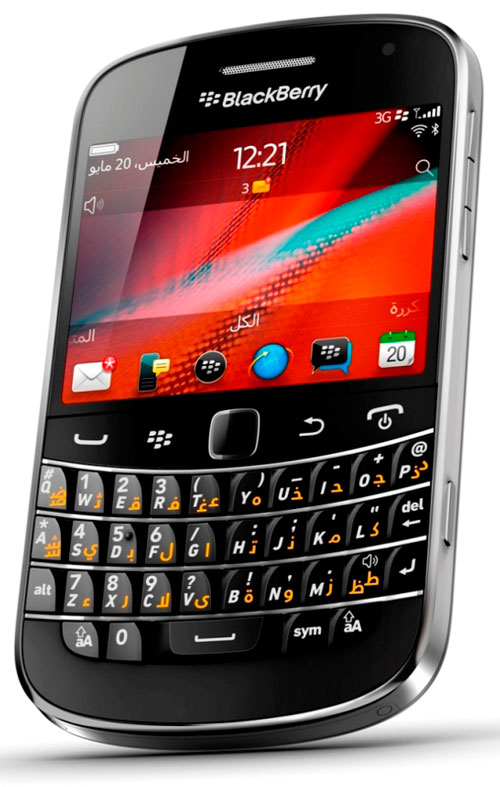
BlackBerry manufacturer Research in Motion (RIM) makes both high- and low-end devices, and its Bold range has traditionally fallen somewhere in the middle of its range. The latest addition to the Bold family, the 9900, is a beautiful device that errs on the higher end of the scale and promises users faster browsing and easier interface navigation.
If we had to sum up the 9900 in a single sentence it would be: “It’s very much like the previous Bold, but with a touch screen.” Though that’s a little reductive, it sums up our first impression of handling the device.
The 9900 is a curious combination of the sort of comfortable Qwerty keyboards that make most BlackBerry’s devices instantly recognisable and capacitive touch screens that so many non-BlackBerry users have assumed the devices include when trying to use one for the first time.

The result is a BlackBerry that’s easier to operate than non-touch versions, albeit one that is still burdened with an operating system (OS) that is more complicated and frustrating to use than it should be, especially for first-time users.

Though the 9900’s menu structure is somewhat better than its predecessors’, changing settings still requires digging about in menus, and sections still aren’t labelled as intuitively as they should be. Long-time BlackBerry users won’t find this a problem, but for those who aren’t accustomed to the BlackBerry software, it’s an annoying aspect of an otherwise lovely device.

Equipped with a 1,2GHz processor, 768MB of RAM and 3G HSPA+ aerial, the 9900 runs BlackBerry 7 OS, which includes support for HTML5 and promises much faster browsing speeds. RIM claims there is an improvement in speed of as much as 40% over BlackBerry 6 and 100% over BlackBerry 5.

The 9900 has the same dimensions as the Bold 9000 but is far thinner at only 10,5mm thick and — this is a big selling point — it includes a larger keyboard. The keyboard is superb and the bigger keys result in fewer typing errors. If you’re a fan of Qwerty keyboards, the 9900’s is best in class.

With support for 16m colours and a resolution of 640×480, the phone’s 2,8-inch screen is bright, crisp and responsive to the touch. It supports pinch to zoom, which makes Internet browsing and document reading even better.

Click image to enlarge

The 9900 also includes a digital compass and accelerometer as well as support for near-field communications (NFC), the mobile payments technology. Although there aren’t as yet any real uses for NFC in SA, it does mean that the 9900 has a degree of future-proofing.

One of the most appealing things about the 9900 is the styling. It feels and looks like a top-end device. From the feel of the keyboard and the vibrancy of the screen, to the stainless-steel trim and matching buttons around the edge of the device, it exudes style.

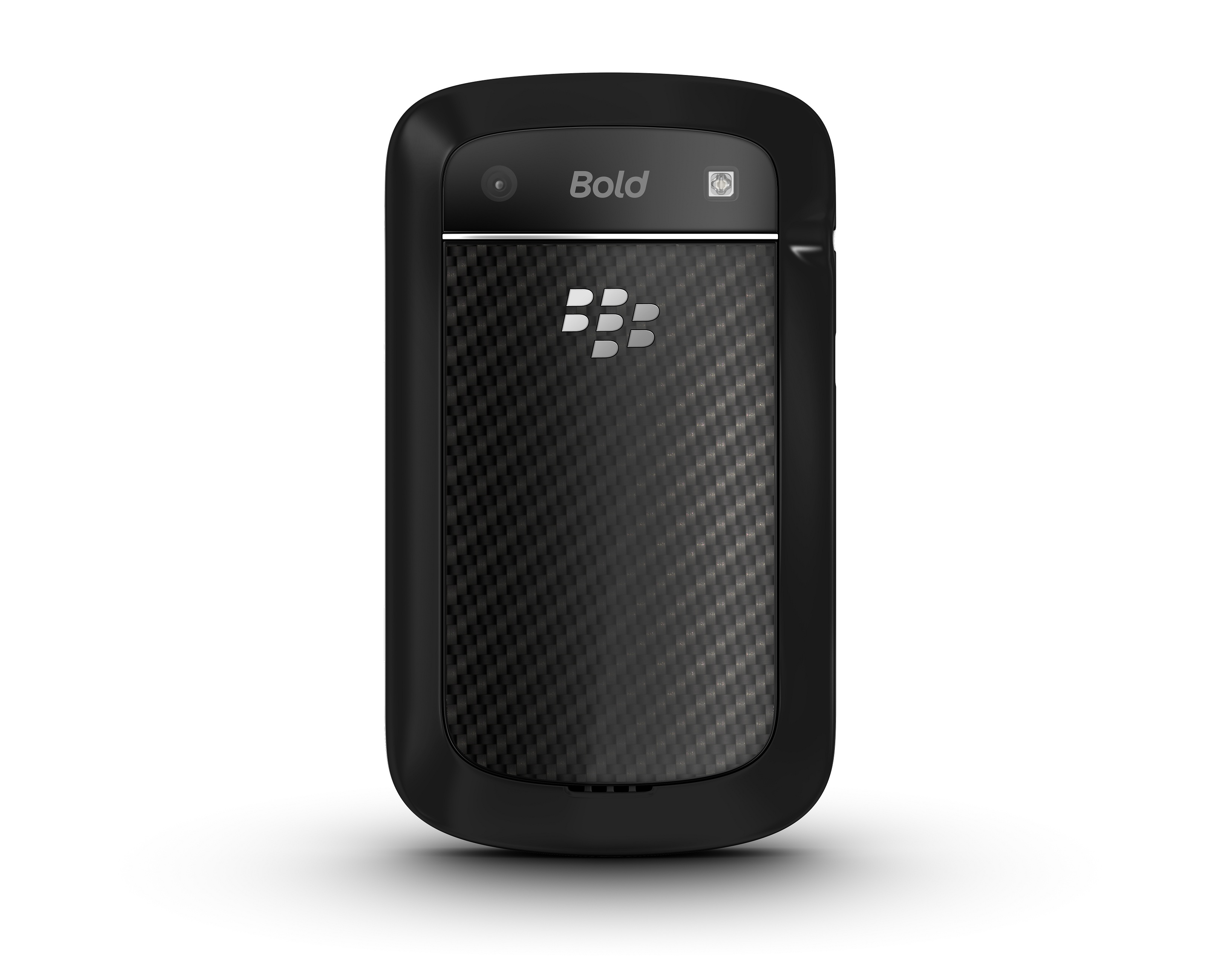
The high-gloss rear cover is a fingerprint magnet, but the rubberised portion that surrounds it makes the 9900 a pleasure to hold and less slippery than it would be had the cover’s material been used for the whole rear.

The 9900 comes with 8GB of internal storage and support for microSD cards up to 32GB. Like its peers, the 9900 is charged or tethered by means of microUSB.

It also includes a 5-megapixel rear camera with an LED flash. The camera is capable for its class, and although RIM hasn’t included a front-facing camera, considering how rarely we’ve actually ever used one, this doesn’t seem much of an impediment.

The BlackBerry Bold 9900, which retails for R6 999 without a contract, is the logical evolution of the Bold range and that’s both where it succeeds and where it fails. It succeeds because it offers a familiar but improved experience to the BlackBerry faithful. It fails because it offers little in the way of features compelling enough to attract outsiders to the fold.
If you like BlackBerry devices, you’ll probably love the new Bold. If you don’t, you probably won’t even notice it. — Craig Wilson, TechCentral

Wednesday, August 24, 2011

Gadget Web Site - BlackBerry launches 3 new Curves


BlackBerry launches 3 new Curves

23 Aug 2011 by Editor
* Follow Gadget on Twitter on @gadgetza


Research In Motion today announced the BlackBerry Curve 9350, 9360 and 9370 smartphones, all featuring the company's new BlackBerry 7 Operating System.

Research In Motion (RIM) today announced three new BlackBerry smartphones featuring the BlackBerry 7 Operating System (OS). The all-new BlackBerry Curve 9350, BlackBerry Curve 9360 and BlackBerry Curve 9370 smartphone are exciting additions to the popular BlackBerry Curve series.

These new models are designed to address a large and important segment of the global mobile phone market where customers are looking to upgrade their existing feature phone or existing BlackBerry Curve with an affordable, easy-to-use, full-featured and socially-connected smartphone.

“These new models will build on the incredible success of the BlackBerry Curve line and further expand the largest global launch of BlackBerry smartphones in our history,” said Mike Lazaridis, President and Co-CEO at Research In Motion. “The new BlackBerry Curve smartphones are absolutely stunning and offer a significant performance upgrade with an unmatched mobile social experience for the millions of feature phone users in the market as well as our existing Curve customers.”

Everything You Need

The new BlackBerry Curve smartphones are slim, stylish and simply beautiful. They are ergonomically designed with a comfortable and iconic keyboard for fast, accurate typing and an optical trackpad for easy, one-handed navigation. GPS and Wi-Fi support are also included, as well as a 5MP camera with flash and video recording so that memories can be captured and instantly shared on social networks. The microSD/SDHC slot supports up to 32 GB memory cards for additional media storage.

In addition to supporting the new BlackBerry 7 OS, the new BlackBerry Curve smartphones feature a range of powerful hardware enhancements including upgraded processors, displays and memory, and built-in support for NFC (Near Field Communications), a new technology that is enabling many exciting capabilities, including the ability to pair accessories or read SmartPoster tags with a simple tap of the smartphone.

Next-Generation BlackBerry 7 OS

BlackBerry 7 introduces a next generation BlackBerry browser which combines the dramatically improved performance of the advanced WebKit browser engine with the hardware enhancements in the new BlackBerry Curve smartphones to deliver a significantly faster, more fluid web browsing experience. 

Additional enhancements to this next generation BlackBerry browser have also enabled smoother navigation and optimized HTML5 performance for incredible gaming and video experiences.

BlackBerry 7 OS also includes a number of other pre-loaded applications and integrated functionality for increased productivity and collaboration right out of the box. The Premium version of Documents To Go is included free of charge, offering users powerful document editing features as well as a native PDF document viewer. 

BlackBerry® Protect is also pre-loaded*, offering customers the peace of mind that personal data can be backed up and secured in the cloud. With BlackBerry Protect, users can locate their misplaced BlackBerry smartphone using GPS or remotely turn up the ringer for an audible notification if their handset is close-by. 

BlackBerry® Balance (announced May 2, 2011) is integrated in BlackBerry 7, allowing users to enjoy the full BlackBerry smartphone experience for both work and personal purposes without compromising the IT department’s need for advanced security and IT controls. The popular universal search capability has also been enhanced with support for voice-activated search, so users can now simply speak to begin searching their device and the web for information.

Best In Class Communications and Social Experiences

The next generation BlackBerry Curve smartphones deliver the world’s best mobile communications and social experiences with a highly refined and integrated suite of phone, email, messaging and social apps to keep users connected and productive throughout the day.

The latest release of BBM™ (BlackBerry® Messenger) is pre-loaded and now extends the real time BBM experience to a range of other apps, such as Foursquare, allowing users to easily interact with each other from within the ‘BBM connected’ app (see separate announcement on July 28, 2011).

The updated Social Feeds (2.0) app has been extended to capture updates from media, podcasts, and favorites all in one consolidated view. The new Facebook® for BlackBerry smartphones (2.0) app introduces features like Facebook chat and BBM integration that makes it easier for users to connect with their 
Facebook friends in real time utilizing push notifications. Twitter for BlackBerry smartphones also delivers a deeply integrated experience including use of real time push notifications and Social Feeds integration.

Availability

The BlackBerry Curve 9350, 9360 and 9370 smartphones are expected to be available from carriers in Canada this month and from other carriers around the world beginning in September. Availability dates and pricing for specific devices from specific carriers will be announced in conjunction with RIM’s partners.