Showing posts with label Managing cell phones and 3G cards in business. Show all posts

Monday, January 12, 2015

Take charge

By , Contributor


Gavin Hill, director: communications and networking (MEA), Dimension Data.
The real cost of telecommunications services in SA is increasing, bucking international trends. This is according to Jiaqi Sun, senior research analyst for IDC. Sun, who opened this month's roundtable discussion, believes profitability is driving this trend, with mobile operators a case in point. Sun's question to the panel was: "Is it possible to manage telecoms costs?"
Peter Walsh, director at CommsCloud, suggests that while the likes of MTN and Vodacom are making piles of money, they're not investing in their customers.
"Nobody's going to the customer and getting to understand their pain points," he says, adding he has yet to find someone from any of the local mobile networks trying to understand how to drive customers' costs down. "That's because those people (mobile operator salespeople) are incentivised on a commission basis. So you'd be asking them to cannibalise their income and their market," says Walsh.

Nebula's COO Jacques van Zyl agrees. He says mobile operators see no benefit in helping customers understand where they are and where they need to go.
Tyron Sharnock, sales manager at AspiviaUnison, believes things are changing. "Previously, (vendors) just needed to deliver an invoice and you would pay it, possibly with a discount. Now there's more visibility and pressure from the client… to say, I want this, I want that, I want more, I need more, I need better information."

Walsh believes enterprises need to take charge. "That's why we have telecoms cost management; I imagine that, in the enterprise, it's very low in South Africa. I remember going to a telecoms expense management conference in Amsterdam in 2010, and their stats on South Africa was 12% or 15% take-up. So you need to take ownership of your costs."
Stanley Louw, network transformation lead for Accenture SA, believes the issue is one of managing telecoms costs properly within an organisation.
Nobody's going to the customer and getting to understand their pain points.
Gavin Hill, director: communications and networking (MEA) at Dimension Data, says telecoms costs remain high in SA because enterprises don't necessarily pressure the carriers on pricing.
"Pressure from the enterprise is brought to bear when they take a holistic or more strategic approach to how they consume services, who they choose as their carriers, the pricing models they demand and start to dictate, as opposed to being dictated to by the carriers, which has happened for far too long in this country," he elaborates.
But why is this the customer's fault?
"In many instances, it is. We haven't pushed back hard enough... on the carriers to demand the services we want and the prices we want to pay," says Hill.
Jacques van Zyl, COO, Nebula.
Reshaad Sha, chief strategy officer of Dark Fibre Africa, trots out the economies of scale argument, essentially suggesting if SA used more data or voice minutes, the cost would come down. While acknowledging this is somewhat of a Catch-22 scenario, he suggests consumers are not quite as vigilant as they could be.
"If somebody gets a local phone bill with a voice side that's exceeding R2 000 a month, then it's an education issue, because he doesn't understand. He should never have to pay more than R2 000, simply because there are many packages that allow unlimited calls for a fixed fee (of about that)," he insists.
Hill suggests the reason voice minutes are down is partly due to cost and partly due to increased use of social media. "Voice minutes are never going to grow beyond a certain volume, because the next generation doesn't use them," he says.
Sha agrees: "That's why you're seeing the growth in data far outstripping that of voice. That's why you're seeing the cost per megabyte coming down so significantly as opposed to the cost per minute of voice. It's largely driven by that usage," he suggests.
Van Zyl wonders which came first, the chicken or the egg: "Isn't part of why consumers use WhatsApp, Internet Messaging and Skype because telecoms costs are high?"
However, he notes this is not just restricted to the consumer market. Some companies, he reports, are actively promoting the use of WhatsApp and other messaging apps, instead of picking up the telephone.
If all enterprises take control, you will wipe out 20% of telecoms costs just like that.
Louw doesn't necessarily believe lower cost is the motivation for using messaging apps instead of voice calls. "The behaviour of a lot of users is changing and the methods people collaborate with each other are changing too," he says.
Van Zyl retorts that at least some of it has to do with a generation gap. "Kids these days, they're more vested in this; it's part of how they've grown up."
Jiaqi Sun, senior research analyst, IDC.
Sharnock finds it interesting that, in a discussion about telecoms cost management, the first thing is to criticise the mobile service providers for charging too much. "But we can't blame them for their business. Their business is to up-sell, to make profit," he asserts.
That said, he appears to concur with the consensus that enterprise customers are not putting enough pricing pressure on their telco providers. However, Sharnock wonders how these companies could do it, given that few have a central telecoms cost management strategy.
According to his experience, responsibilities are all over the place. For example, while fixed-line data costs typically fall within the ICT budget, fixed-line voice is usually the province of operations, while both 3G data and voice are often the responsibility of HR.
Louw agrees: "It comes down to how you manage it and how you centralise these things and automate the processes around them."
Hill raises another pertinent point: "Many organisations, especially smaller enterprises in this country, think that telecoms expense management is call accounting. They think it's checking how many times Mavis in marketing phones her grandmother."
What gets measured gets managed, and unless enterprises actually do something, those costs are going to continue to increase.
And although he concedes that call accounting should be part of the mix, Hill insists it is far from the be-all and end-all of managing and controlling communications costs. To really get on top of telecoms cost management, he says it's necessary to consider the entire life cycle of each telecoms service from procurement to termination at the end of the contract.
Sha believes for the typical medium-sized business, voice costs are negligible in relation to data connectivity. However, the challenge for such businesses is that their priority is not telecoms management; their priority is doing whatever business they do.
The solution, he says, at least for medium-sized businesses, is to outsource telecoms management to an external non-traditional service provider empowered to change service providers in order to cut costs, while maintaining constant connectivity and high service levels.
Walsh concurs and cites an example from a few years back. "We did a big mobility clean-up where a client was spending R3 000 000 a month on 3G cards. Some R1 750 000 of that was tied up in 3G cards lying in desks and in cabinets all over the country," he says.
Reshaad Sha, chief strategy officer, Dark Fibre Africa.
Sharnock suggests many enterprises simply don't care about reducing costs because those costs are all recovered through enterprise-based cost accounting. "What they do is a claims-based mobile voice thing or a top-up 3G package or here's your allowance. Whatever is over the limit, we're going to take back from HR," he says.
This brings Sharnock back to the lack of central strategy, which, he believes, ultimately results in the enterprise making this the consumer's problem.
Louw agrees, but takes it a step further than centralisation. "There's all this data sitting inside the organisation, but there's very little analytics being done on it (to rationalise costs). If you drive the analytics, you can influence behaviour (and begin to select) the right packages," he says.
Hill notes it is one thing to have the information, but unless you're actually taking action to influence the high costs, the savings are never going to be realised. Coming back to Sha's point, he also suggests enterprises give a third party specialist organisation the mandate to take remedial action on their behalf.
Van Zyl agrees and suggests the level of savings that could be realised by such action. "If all enterprises take control, you will wipe out 20% of telecoms costs just like that," he says. "And that's without taking on the service providers."
Walsh reiterates his point that the enterprise and service provider need to work together. "Business and service providers need to work as partners. That's what telecoms cost management is all about," he says.
"You have to get engaged internally, you have to sit down and communicate, put a strategy together, and if you don't have the skills to do that, and to play a role in industry, then you need to outsource that to somebody else," insists Walsh.
Tyron Sharnock, sales manager, AspiviaUnison.
Partially echoing Walsh, Louw says it comes down to two things for him: business relevance and partnerships. In the first instance, he says advanced technologies must be used to enable business. Secondly, he notes the old days of adversarial relationships between client and supplier have gone and things are very much more about partnerships these days.
Hill echoes the partnership view, but adds a caveat that not all service providers have embraced the new ethos. "The next generation of service providers can be potentially more agile because they don't have a legacy anchoring them down," he says.
Hill also points to a growing trend to adopt utility models of telecoms and ICT consumption as another way to manage the telecoms cost equation. "You don't tie yourself into long-term fixed contracts and become more agile, because you consume these services on a far more granular scale," he elucidates.
Van Zyl believes the partnership model is the best solution for unlocking the value to be found in effective telecoms cost management.
Sharnock reiterates Louw's earlier point about the value of using analytics technology to take control of telecoms cost management. "What gets measured gets managed," he says, "and unless enterprises actually do something, those costs are going to continue to increase."

Wednesday, September 26, 2012

Mobile data deals compared


Vodacom recently unveiled their best ever data deals. This is how it stacks up against MTN, Cell C and 8ta’s data promotions.

Vodacom has recently launched three new data deals – 1GB for R89, 2GB for R139 and 3GB for R189. These data bundles exclude a modem.

The new data deals are available on a 24-month contract, and includes ‘Night Owl’ data which gives another 1GB, 2GB or 3GB of data (depending on the package), to use between midnight and 5 am.

These new data bundles complement the company’s modem inclusive data packages at R99 for 1GB, R149 for 2GB and R199 for 3GB.

This raises the question of how Vodacom’s new modem-less data packages compare with similar contract promotions from 8ta, Cell C and MTN.

The following table provides an overview of some of the prominent data promotions from the four mobile operators.

Data deals under R100
ProviderBonusDataMonthly cost
Cell C–500MBR45
MTNIncludes modem500MBR69
Vodacom1GB night owl data1GBR89
Cell C–2GBR99
MTNIncludes modem1GBR99
R100 to R149
Vodacom2GB night owl data2GBR139
MTNIncludes modem2GBR149
8ta (prepaid)1GB night surfer data2GBR149
R150 to R199
Vodacom3GB night owl data3GBR189
8ta–10GBR199

Friday, August 24, 2012

Mobile price war not ending soon


By Gareth Vorster | 23 August 2012 


The price war between South Africa’s mobile operators is set to continue thanks to the headroom in the local market for further price cuts, according to an analyst.

Despite numerous aggressively-priced voice and mobile data products launched by Cell C recently, the company’s CEO, Alan Knott-Craig, told MyBroadband there is a lot more to come from the company.

An analyst at financial services company, PSG Konsult, told BusinessTech that Cell C’s marketing campaigns have highlighted aggressive moves from the operator in the mobile space.

“It will be interesting to see how this pricing war plays out – particularly between Cell C, MTN, and Vodacom – as South Africa still has some of the most expensive pricing in the world. There is still plenty of room to bring these prices down further, cutting margins,” the analyst said.

Interestingly the analyst omitted 8ta, Telkom’s mobile arm.

By close of play on the JSE on Thursday (23 August), shares in Telkom breached R20 (R20.10) for the first time in several months, advancing 81 cents, or 34.20%, in intraday trade, taking its market cap beyond R10 billion (R10.46 billion).

The PSGK analyst said it was difficult to provide a range for the group, as investors await further clarity on an advised strategy from the Department of Communications.

At the start of June, Cabinet asked the minister of the  DoC, Dina Pule, to report back to it about all the options that are available for Telkom in three months’ time (August), after government blocked the SA operator’s deal with KT Corp.

“Investors are waiting to see if the company will continue as a private entity or whether government will take control,” the analyst said.

He noted the rising share price for Vodacom was most likely as a result of Vodacom’s continued strategy to “pay a nice dividend” along with its attractive yield. “Investors are chasing yields at the moment.”

In the year to date period, shares in Vodacom have moved from R89.11, to R103.42 by close on Thursday – an intraday rise of 1.68% , setting the telco at a market cap of R153.88 billion. It reached a year-to-date best of R110.89 in April.

For MTN, the analyst pointed to some profit taking, following a good run in recent sessions.

“I still think MTN can reach its top estimates (R160) and even move beyond that. We back MTN due to its geographic diversity in Africa and the Middle East. With MTN in so many markets, it is less constrained to one country, which means that it wont feel the effects of a price war to the same extent as, say, Vodacom.”

In the year-to-date period, shares in MTN have moved from R144.50 to a closing price of R156.94 on Thursday, giving the group a market cap of  R295.83 billion.


Wednesday, June 6, 2012

Cell C slashes contract prices


Staff Writer 

Cell C announced today (6 June 2012) that it would be reducing its contract rates with the launch of six “Straight Up” packages for post-paid and hybrid (Top-Up) customers on 22 June 2012. These packages range from Straight Up 30 to Straight Up 800.

This announcement follows the company’s tariff reductions in data as well as pre-paid and international calls.

“For the first time customers can see exactly what they are paying for and select the package that suits them best. For instance when you buy a Straight Up 100 package, you get 100 minutes, 100 SMS’s or MMS’s, and 100 MB of data anywhere, anytime for R100,” said Cell C CEO Alan Knott-Craig.

“The same applies for all Straight Up packages. Customers also no longer have to worry about high out-of-bundle rates. They will pay 99 cents per minute, with per second billing anywhere, any time out of the bundle for every bundle.”

Cell C added that customers will know exactly how many minutes, MB of data and SMSs/MMSs will be in each bundle.

“The minutes in the bundle, however, exclude international calls. Calls to the UK, USA, China, India and Pakistan are billed at 99 cents per minute on per second billing any time, out of bundle. New international rates to all countries will be announced in the next few weeks,” Cell C said.

“And customers get to choose the duration of their contract. If no cell phone is required, then 1 month is the shortest contract,” added Knott-Craig.

Cell C explained that if the customer wants a cell phone, the price of the cell phone will be calculated depending on the length of the contract period chosen – 6, 12, 18 or 24-month. “Add the cell phone monthly price to the contract monthly subscription, and you have your total monthly subscription,” said Cell C.

“If, when using a Hybrid or Top-Up package to control your monthly spend, you run out of minutes or data or SMS’s, simply add a pre-paid SMS voucher or data bundle, or pre-paid airtime voucher at 99 cents per minute anywhere, any time. If you make international calls, the rate for the country will be the applied tariff,” said Cell C.

If you are on a Post-paid contract, simply continue using the service at 50 cents per SMS, 50 cents per MMS, 99 cents per MB of data, and 99 cents per minute for voice. If not used, the voice minutes, messaging and data will automatically roll over and remain valid for 90 days.
“Our packages are simple, transparent and superb value. Only per second billing is used on voice minutes. Customers simply estimate how many minutes, SMS’s and MB of data they want per month and choose a package based on estimated usage,” said Knott-Craig.

“If you don’t use your allocation, we simply roll it over for you. If customers want to use their existing handset they can choose the SIM-only option. If a customer wants a top-of-the-range Smartphone but only requires a small bundle of voice minutes that is also okay. With our new packages you can mix and match as you please.”

“And we have still not finished giving consumers what they want. Not perfect yet I know, but a helluva lot better in terms of simplicity, choice and price than they can get today anywhere. Once Government and ICASA start actively pumping for a more competitive market, we will make it even better for the consumer. We are still a relatively small player, and we can’t do this alone,” said Knott-Craig.

Cell C Post-paid and Hybrid (Top Up) offerings (including VAT):

PackagesSIM only fee*SIM + handset feeMinutes includedSMS/MMSs includedData included (MB)
Straight Up 30Straight Up 30 TopUpR30Deal dependent303030
Straight Up 50Straight Up 50 TopUpR50Deal dependent505050
Straight Up 100Straight Up 100 TopUpR100Deal dependent100100100
Straight Up 200Straight Up 200 TopUpR200Deal dependent200200200
Straight Up 400Straight Up 400 TopUpR400Deal dependent400400400
Straight Up 800Straight Up 800 TopUpR800Deal dependent800800800
*SIM + device: The monthly fee is dependent on the value of the device
.

Thursday, May 17, 2012

Mobile broadband pricing comparison


 / MyBroadband


Cell C has cut its mobile broadband prices by over 50% while MTN and 8ta has extended their mobile data promotions.


Cell C has slashed the price of their 500MB and 2GB postpaid data packages and their 24GB prepaid SIM products. The postpaid price cuts were in excess of 50%.

Cell C’s price cuts followed announcements from MTN and 8ta that they have extended their 2GB prepaid data and GoBig promotions respectively.

Vodacom is also currently running a mobile broadband promotion for contract subscribers, offering them a 1GB data package and modem for R99 and 2GB and a modem for R149 per month.

This raises the question of how the different mobile broadband promotions compare on price and who offers the best deal.

The table below provides an overview of some of the prominent mobile broadband promotions in South Africa.
ProviderData (GB)Modem includedAfter hous dataOOB pricePrice (Rand)
500MB data contract
Cell C0.5No00.3949
Cell C0.5Yes00.3969
Vodacom0.5Yes11.00149
MTN0.5Yes00.38189
1GB data contract
Vodacom1Yes11.0099
Cell C1Yes00.39199
MTN1Yes00.29289
2GB data contract
Cell C2No00.3999
Cell C2Yes00.39119
Vodacom2Yes21.00149
MTN2Yes00.29149
ProviderData (GB)Modem includedAfter hous dataOOB pricePrice (Rand)
10GB data contract
8ta10No00.30199
8ta10No100.30299
Vodacom10Yes100.501449
2GB prepaid data bundles
8ta2No11.00149
MTN2No00.19189
Vodacom2No02.00369
Prepaid 12 month package
Cell C24No00.391299
8ta60No601.001800

Friday, March 23, 2012

FEATURED Now is the worst time ever to buy an Android phone


By:  | Mar 22nd, 2012 at 01:05PM

Android phones have never been as impressive as they are today. They have never been as responsive, as slim or as powerful. Their displays have never been more vivid or more stunning. Their data speeds have never been as fast. Competition is now hotter than ever before in the smartphone market and consumers are reaping the benefits. At its core, each and every new smartphone that launches is an engineering feat that simply could not have existed a few short years ago. And yet as amazing as the current crop of smartphones might be, there has probably never been a worse time in Android’s brief but storied history for savvy users to buy a smartphone.
A quick glance through the smartphone catalogs of each of the four major wireless carriers in the United States reveals a terrific array of Android handsets. There is certainly no shortage of gigahertz or gigabytes, and spec sheets in general have become laundry lists of cutting-edge technology. More importantly, of course, this new breed of Google-powered phones offers performance that is far more responsive and fluid than previous generations of handsets. But as impressive as these devices are, right now is a horrible time to buy any of them.
Things are about to get a whole lot better.
For tech savvy smartphone users, committing to a two-year contract is brutal. Mobile technology moves so fast that smartphones can seem outdated just months after they launch. While this trend is bound to continue, the degree to which new generations of Android phones outdo their predecessors will always ebb and flow. Handsets have been improving at a somewhat modest pace for the past year or so, but the next crop of smartphones to hit store shelves will represent a huge leap forward rather than a few short steps.
Two leading smartphone makers, Samsung and HTC, are on the verge of launching next-generation devices that will put today’s high-end handsets to shame. HTC has already unveiled its new One-series phones, and the two high-end models it showed off at Mobile World Congress are game-changers, plain and simple.
The HTC One X is the Taiwan-based company’s flagship smartphone for the first half of 2012, and it features a 1.5GHz quad-core Tegra 3 processor, a 4.6-inch 1,280 x 720-pixel Super LCD 2 display, an 8-megapixel rear camera, a 1.3-megapixel front-facing camera for 720p video chats, 1GB of RAM, 32 GB of internal storage, embedded 4G LTE and Sense 4.0 on top of Android 4.0 Ice Cream Sandwich. All that technology, mind you, is squeezed into a gorgeous 9.27-millimeter-thick unibody polycarbonate case. The U.S. version of this handset will feature a dual-core Snapdragon S4 processor and 16GB of internal storage, but the impact of this “downgrade” on the user experience is negligible — the phone is still lightning fast and beyond smooth.
HTC’s One S is a mid-range smartphone, though the term “mid-range” is used very loosely in this case. The device sports a 4.3-inch qHD AMOLED display, a dual-core 1.5GHz Qualcomm Snapdragon S4 processor, an amazing 8-megapixel camera, 16GB of internal storage, Sense 4.0 and Android 4.0 Ice Cream Sandwich, all packed within an even more slender 7.9-millimeter case made of Micro-Arc Oxidized aluminum.
While Samsung hasn’t yet unveiled its next-generation flagship smartphone, a series of exclusive BGR reportspaint a fairly comprehensive picture of the Galaxy S III. To start things off, we can expect the most stunning display ever to be used on a smartphone. This high-definition, 1080p-resolution, 4.8-inch Super AMOLED display will be to smartphones what Apple’s new Retina Display is to tablets. Toss in a 1.5GHz quad-core Samsung Exynos processor, an 8-megapixel rear camera, a 2-megapixel front-facing camera, 4G LTE, Android 4.0 Ice Cream Sandwich and a sleek ceramic case, and you’ve got one of the most remarkable mobile devices the world has ever seen.
In short, there probably hasn’t been a worse time than right now to buy a new Android phone and get locked in to a new two-year contract.
These next-generation Android phones will set a new precedent, and handsets that launch for the subsequent six to nine months will be playing catch-up. The chips within these new smartphones are faster, smaller and they consume power far more efficiently than the silicon that came before them. And while I haven’t yet had the opportunity to test the upcoming Galaxy S III, I have handled the One X and One S, and I can confidently say that they offer an end-to-end experience that is significantly better than what we see on the market today. The cameras alone, which are powered by a dedicated chip and are capable of capturing a RAW 8-megapixel image and returning to a ready state in just 0.7 seconds, are worth the wait.
These new smartphones will be slimmer, sleeker and more capable than anything on the market today, and they will still tout better battery life and more impressive performance. With HTC’s handsets ready to begin launching next month on AT&T, Sprint and T-Mobile, and the Galaxy S III set to be unveiled in April or May, Android fans would be wise to sit tight for now.
Tags: , , , , , , , , ,, , , , , , 

Tuesday, March 6, 2012

Online support: Who sucks and who doesn’t


February 23, 2012
14 Comments


We put Telkom, Vodacom, MTN, Cell C, Virgin Mobile and Neotel’s online support systems to the test
Telkom and Vodacom came out tops in a recent MyBroadband survey which set out to test the online support channels of South Africa’s largest telecoms operators.

MyBroadband sent all the operators a simple request for information on slow broadband speeds, asking them for feedback on how to address the issue. The operators were asked to respond via e-mail (and hence not telephonically).

Here are the results.

Telkom (support e-mail sent on 11:35 on 21 February 2012)
Telkom immediately responded with an automated e-mail message confirming receipt of the e-mail and providing me with a reference number.
At 12:14 (hence only 40 minutes after the initial e-mail was sent) Telkom officially responded to the e-mail and provided the details needed to resolve the issue.

Vodacom (web support form completed 11:23 on 21 February 2012)
Vodacom immediately replied with an automated e-mail with the message “We are looking into your query and one of our consultants will contact you within 24 hours”. The e-mail also contained a reference number.
At 14:57 (3 hours 29 minutes after the initial e-mail) Vodacom officially responded with all the details to solve the problem.

MTN (web support form completed 11:28 on 21 February 2012)
MTN’s online support system does not have an auto-response system, and the company also did not respond to the online support request by the time of publication.

Cell C (web support form completed 11:31 on 21 February 2012)
Cell C responded immediately via an automated e-mail saying “We have received your query. One of our support staff will contact you shortly if necessary.” This is however where it stopped and there was no feedback from Cell C by the time of publication.

Virgin Mobile (web support form completed 11:41 on 21 February 2012)
Virgin Mobile immediately responded via an automated system, saying “Thank you for contacting Virgin Mobile SA Technical Support Team. We are eager to assist you and will be calling you in the next 4 hours.”
There was unfortunately no feedback from Virgin Mobile within the promised 4 hours, and by the time of publication the company still had not responded to the online support request.

Neotel (website was down and therefore no online support was available)
During the time of testing the Neotel website was down. It was therefore not possible to test Neotel’s online support.

*Please note that MyBroadband only tracked e-mail responses (we asked specifically to be contacted via e-mail), and there may have been calls directed at the numbers provided in the emails.
Email support test
Company Auto responder Official response Time to resolve issue
Telkom Yes Yes 40 minutes
Vodacom Yes Yes 3 hours 29 minutes
Cell C Yes No Not solved
Virgin Mobile Yes No Not solved
MTN No No Not solved
Neotel Website down Website down Website down

Monday, January 2, 2012

Data usage: Smartphones vs dongles « Broadband « MyBroadband Tech and IT News


January 2, 2012
0 Comments


Vodacom provides insight into the data usage patterns and growth on its network.
Over the last twelve months the data consumed by smartphones increased tenfold on the Vodacom network while data used by dongles only showed moderate growth.

This is one of the surprising revelations made by Vodacom CEO Pieter Uys who addressed the media at an event in Sandton.

Uys revealed that the average data consumed by mobile broadband dongles grew from 500MB to 550MB year-on-year. This translates into a 10% yearly growth in data usage on dongles.

Smartphone data usage in comparison grew by 100% over the same period – up from 40MB per month to the current 80MB per month.

Another interesting statistic is that the ratio of dongle/smartphone data usage on the Vodacom network changed from 80/20 last year to the current 60/40.

The reason for this strong smartphone data usage is twofold: there are far more smartphones on the Vodacom network and smartphone users are consuming significantly more data.

Vodacom currently has 1.1 million data dongles on its network, up from 1 million a year ago. In comparison Vodacom has 4.1 million active smartphones on their network.

Uys added that he expects the strong growth in smartphone uptake to continue, especially with the price of Android devices dipping well below R1,000 each.

Wednesday, October 19, 2011

The ‘iDevice’ nightmare facing corporate IT shops

Employees want devices like Apple's iPad to work with their company's IT systems

Employees bringing their own gadgets, from smartphones to tablet computers, into the companies they work for and expecting them to function seamlessly with corporate technology systems is proving to be a significant and growing challenge for IT departments.

Warren Johnson, account technology specialist at Microsoft, says IT departments are struggling to
figure out how to accommodate the growing range of devices and online ecosystems that employees expect will interoperate with company-managed systems. In many cases it’s creating a security headache for IT directors, he says.

It’s becoming a tricky balancing act for many companies as they try to figure out how to benefit from this “consumerisation of IT”, while at the same time ensuring their systems aren’t compromised and the IT department doesn’t become overloaded because it’s supporting a multitude of nonsanctioned devices and ecosystems.

Employees are also expecting more from IT because they come across business systems online and want the technology function in their organisations to replicate it.

“We don’t see this trend stopping,” Johnson says. “IT has to catch up with what consumers are demanding.”

The question, he says, is whether they can. Though some companies are “really trying” to adopt and adapt to consumer technologies, it can become a “nightmare” to manage all the devices. “Internal developers are asking how they keep up with all the different technologies out there.”

The challenge for many IT departments is it’s often the CEO that is demanding his iPad or other new-fangled device interoperates seamlessly with the corporate backend systems, meaning they don’t have the choice of simply barring their use.

“The executives want the funky stuff. Four years ago they were saying you have to secure and manage everything because it’s too costly for us. Now they’re saying bypass it for me because I want my funky laptop.”

Johnson says embracing IT consumerisation has many benefits — and some employees may shun the idea of working for a company that doesn’t allow them to use their own gadgets for business purposes — but there are also big risks. “What if there is a zero-day attack on a platform you’re not in control of?”

Part of the solution, he says, is for companies like Microsoft to make it easier to develop applications that run across platforms. In Windows 8, the upcoming release of Microsoft’s dominant desktop operating system, developers will be able to write apps in Web-based programming languages and port these to other platforms.

“But it’s hard,” Johnson says. “We get organisations saying that if they allow users to bring in any device, then what sort of apps do they permit? If I can’t secure that device, how do I control which devices can have which apps with which data?”

Of course, not all organisations can allow consumer IT products and services. Johnson says Scotland Yard, by way of example, controls what devices are able to access its systems very tightly to prevent sensitive information from leaking. The organisation is strict about what devices, applications and data its employees may use.

But for many companies, embracing the trend has bigger benefits than trying to fight it, Johnson says.
Ultimately, he says, end-user devices will catch up with standards and allow IT departments to manage them better. “Manufacturers will come up with devices that support data encryption and they’ll be more on par with each other in terms of security and manageability.”

Until then, companies have a very real challenge on their hands: embrace the benefits and assume the risks, or try to move against the trend and face a revolt from users.
— Duncan McLeod, TechCentral

Sunday, October 2, 2011

Mobile Phones dominate in South Africa / Nielsen Wire

September 30, 2011 Jan Hutton, Director, Telecoms, Nielsen Southern Africa

Africa is in the midst of a technological revolution, and nothing illustrates that fact than the proliferation of mobile phones. Consider this: more Africans have access to mobile phones than to clean drinking water. In South Africa, the continent’s strongest economy, mobile phone use has gone from 17 percent of adults in 2000 to 76 percent in 2010. Today, more South Africans – 29 million – use mobile phones than radio (28 million), TV (27 million) or personal computers (6 million). Only 5 million South Africans use landline phones.


Nielsen’s recently released Mobile Insights study in South Africa, which examined consumers’ usage of and attitudes toward mobile phones, networks and services, reveals a number of interesting insights:

- High levels of network loyalty: 95 percent of subscribers have been with their carrier for an average of 4.2 years, and 81 percent said they’d recommend their network providers to friends and family, reinforcing the importance of word-of-mouth and reputation in the industry.
- Move from pre-paid to contracts: While pre-paid plans still make up between 82 and 85 percent of the market, 25 percent of subscribers say they could switch from pre-paid to contract packages within the next year.
- Network quality a key decision factor: More than a quarter (27%) said they left their previous provider due to poor network quality.
- Nokia rules: More than half (52%) own that company’s handsets, followed by Samsung and BlackBerry, and 56 percent of those currently using other brands indicated their next handset would likely be a Nokia.

How do South Africans Use their phones?

As in other countries, mobile phones are being used in a range of ways aside from talking. South Africa ranks fifth in the world for mobile data usage, ahead of the United States, which ranks seventh.

More than 20 percent of those surveyed said they download ringtones and a similar number said they download music. Wallpapers, screensavers and pictures are also popular downloadables. The mobile phone as an Internet device is also on the rise – 11 percent of South Africans use their mobiles to go online, and consumers aged 25-34 are the heaviest users.

Facebook is the most popular social media platform, used by 85 percent of mobile subscribers. Half of all users of Facebook in South Africa access the site via their mobiles. MXIT, a mobile instant messaging platform, is also popular in the country, with 61 percent saying they access the site. SMS text messaging is practically ubiquitous among South African mobile customers, and is used by almost 4.2 times more people than e-mail.

More than two-thirds (69%) of consumers prefer sending texts to calling, in large part because it is less expensive, and 10 percent believe texting to be a faster way of communicating.

The majority (60%) of South African mobile users said they are aware of mobile banking services offered by banks, but only 21 percent say they use such services. A much larger number of those aware of the services said they would never use them, suggesting banks might need to invest in communicating the benefits and security of mobile banking.

This survey provides a comprehensive benchmark against which the changes occurring in the rapidly evolving telecom sector can be measured. When one considers that just three years ago, there were no smartphones being used on the continent, the pace of change is stunning. South Africa is the biggest market, but other countries on the continent are likely to catch up fast.

Friday, September 9, 2011

BlackBerry Bold 9900: fantastic and forgettable // TechCentral

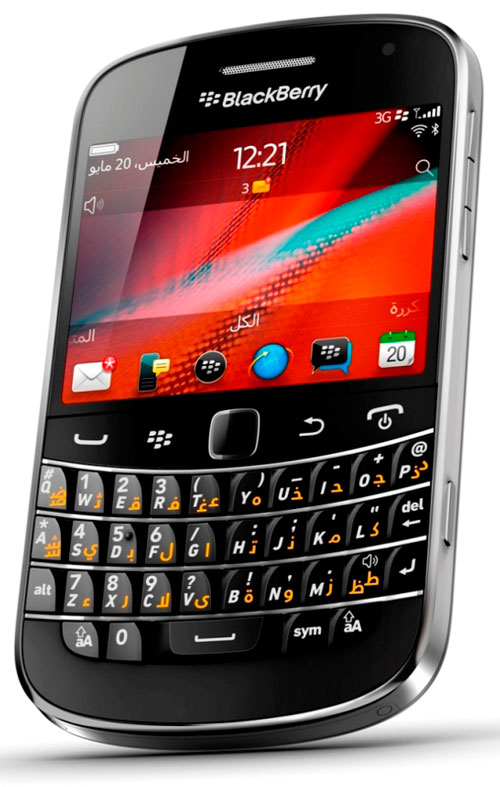
BlackBerry manufacturer Research in Motion (RIM) makes both high- and low-end devices, and its Bold range has traditionally fallen somewhere in the middle of its range. The latest addition to the Bold family, the 9900, is a beautiful device that errs on the higher end of the scale and promises users faster browsing and easier interface navigation.
If we had to sum up the 9900 in a single sentence it would be: “It’s very much like the previous Bold, but with a touch screen.” Though that’s a little reductive, it sums up our first impression of handling the device.
The 9900 is a curious combination of the sort of comfortable Qwerty keyboards that make most BlackBerry’s devices instantly recognisable and capacitive touch screens that so many non-BlackBerry users have assumed the devices include when trying to use one for the first time.

The result is a BlackBerry that’s easier to operate than non-touch versions, albeit one that is still burdened with an operating system (OS) that is more complicated and frustrating to use than it should be, especially for first-time users.

Though the 9900’s menu structure is somewhat better than its predecessors’, changing settings still requires digging about in menus, and sections still aren’t labelled as intuitively as they should be. Long-time BlackBerry users won’t find this a problem, but for those who aren’t accustomed to the BlackBerry software, it’s an annoying aspect of an otherwise lovely device.

Equipped with a 1,2GHz processor, 768MB of RAM and 3G HSPA+ aerial, the 9900 runs BlackBerry 7 OS, which includes support for HTML5 and promises much faster browsing speeds. RIM claims there is an improvement in speed of as much as 40% over BlackBerry 6 and 100% over BlackBerry 5.

The 9900 has the same dimensions as the Bold 9000 but is far thinner at only 10,5mm thick and — this is a big selling point — it includes a larger keyboard. The keyboard is superb and the bigger keys result in fewer typing errors. If you’re a fan of Qwerty keyboards, the 9900’s is best in class.

With support for 16m colours and a resolution of 640×480, the phone’s 2,8-inch screen is bright, crisp and responsive to the touch. It supports pinch to zoom, which makes Internet browsing and document reading even better.

Click image to enlarge

The 9900 also includes a digital compass and accelerometer as well as support for near-field communications (NFC), the mobile payments technology. Although there aren’t as yet any real uses for NFC in SA, it does mean that the 9900 has a degree of future-proofing.

One of the most appealing things about the 9900 is the styling. It feels and looks like a top-end device. From the feel of the keyboard and the vibrancy of the screen, to the stainless-steel trim and matching buttons around the edge of the device, it exudes style.

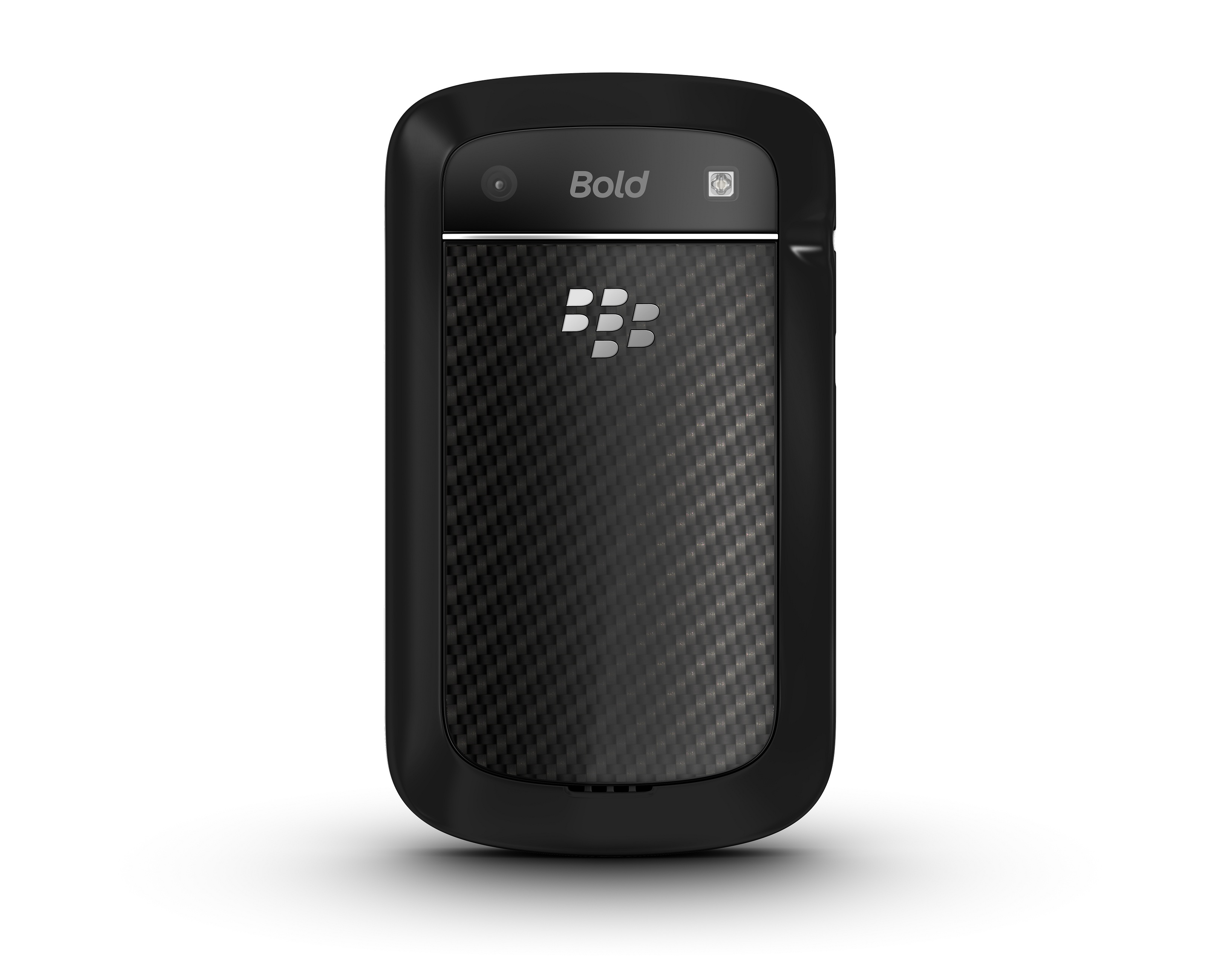
The high-gloss rear cover is a fingerprint magnet, but the rubberised portion that surrounds it makes the 9900 a pleasure to hold and less slippery than it would be had the cover’s material been used for the whole rear.

The 9900 comes with 8GB of internal storage and support for microSD cards up to 32GB. Like its peers, the 9900 is charged or tethered by means of microUSB.

It also includes a 5-megapixel rear camera with an LED flash. The camera is capable for its class, and although RIM hasn’t included a front-facing camera, considering how rarely we’ve actually ever used one, this doesn’t seem much of an impediment.

The BlackBerry Bold 9900, which retails for R6 999 without a contract, is the logical evolution of the Bold range and that’s both where it succeeds and where it fails. It succeeds because it offers a familiar but improved experience to the BlackBerry faithful. It fails because it offers little in the way of features compelling enough to attract outsiders to the fold.
If you like BlackBerry devices, you’ll probably love the new Bold. If you don’t, you probably won’t even notice it. — Craig Wilson, TechCentral

Tuesday, August 30, 2011

Android on your iPhone | TechCentral

[By Craig Wilson]

There’s less and less separating mobile handsets from one another when it comes to the hardware that powers them. So, what happens when users can decide for themselves what operating system software they want to run on their phones?

Just looking at the latest smartphone offerings from Motorola, Samsung, HTC and other device manufacturers, high-end phone hardware is looking increasingly similar: dual-core processors, 1GB of RAM and screens with at least 900 pixels on the long side are now standard smartphone qualities, regardless of brand.

Despite minor differences in screen resolution, dozens of phones from different manufacturers all run Android pretty much out the box. What separates them is a user interface overlay of some sort — Samsung’s TouchWiz, HTC’s Sense or Motorola’s Motoblur.

And that’s really the point: as devices look more and more like one another, there’s less emphasis on hardware differentiators and more on the little tweaks and user interface alterations made by manufacturers.
And then there’s the iPhone. Unlike Android, Apple’s iOS software doesn’t even pretend to be “open”. But that hasn’t stopped people from finding ways around this. The iPhone can be “jailbroken” and then the possible alterations are only limited by the user’s imagination and abilities.

Apple tried to argue that “jailbreaking” a device violated end user agreements. But US courts disagreed, saying that once you as a consumer have bought a device, it’s yours to do with as you wish.

So what if you love iOS but can’t afford an iPhone, or you can but you’d love the LED-flash and higher resolution camera a competitor’s device has to offer? Just as some people run Windows on Apple Macs, and vice versa, it’s surely only a matter of time before you choose your device, and then your operating system, rather than the other way around.

Of course, manufacturers hate the idea. They spend fortunes on user interface design and operating system development, in part so that they can try and be the first to offer something a competitor doesn’t. Where devices are becoming more homogeneous, software is a great place to differentiate.

But the disapproval of manufacturers isn’t going to stop resourceful consumers from figuring out how to make their devices operate exactly as they’d like them to, even if that means replacing the software that powers them.

Android users are already well known for overhauling the software shipped with their devices through a process called “rooting” — not to be confused with the Australian use of the same term which means something decidedly less technical. By rooting an Android device, users can make big or minor alterations, from choosing to store applications on an SD card rather than the device’s internal memory to installing a heavily customised operating system.

Steven Ambrose, MD of SA consulting firm Strategy Worx and a serial device dabbler, says that as hardware gets more and more generic, it’s possible consumers will start installing different operating systems on their phones, much like they’d choose to install Linux on a PC instead of Windows.

“A perfect example is the HTC HD7,” Ambrose tells me. “That phone has been released running Windows Mobile 6.5, Windows MobilePhone 7 and Android. The devices have had slightly different names, but all run the same hardware.”


He says with the forthcoming iOS 5 from Apple no longer requiring a desktop or laptop to set up, this may be the final step required to move the ideas of the Hackintosh to the world of mobile devices. The Hackintosh community creates hacks that allow users to install Apple’s Mac OS X on non-Apple hardware.

Though the majority of consumers are quite happy to use their devices as the manufacturers intended, there are a growing number of power users who want to eke the most out of the hardware and make it conform to their expectations rather than the other way around.

iOS users might ask why anyone would want Android on an iPhone, and Android users might ask the same of iOS users, but consumers have different demands.

Recently, a woman approached me in a coffee shop and asked me to help her connect to the Internet. She put her MacBook Pro in front of me and my jaw dropped when I saw it was running Windows 7. I asked her why she’d ditched Mac OS X and she said it was because her company used software that didn’t run on the Apple operating system.

Like it or not, we’re still bound by the whims of those who make the smartphones we use and, despite the enormous capabilities inherent in their devices, we remain constrained by the artificial walls created by manufacturers. Those walls may be about to come tumbling down.