Monday, January 2, 2012

Data usage: Smartphones vs dongles « Broadband « MyBroadband Tech and IT News


January 2, 2012
0 Comments


Vodacom provides insight into the data usage patterns and growth on its network.
Over the last twelve months the data consumed by smartphones increased tenfold on the Vodacom network while data used by dongles only showed moderate growth.

This is one of the surprising revelations made by Vodacom CEO Pieter Uys who addressed the media at an event in Sandton.

Uys revealed that the average data consumed by mobile broadband dongles grew from 500MB to 550MB year-on-year. This translates into a 10% yearly growth in data usage on dongles.

Smartphone data usage in comparison grew by 100% over the same period – up from 40MB per month to the current 80MB per month.

Another interesting statistic is that the ratio of dongle/smartphone data usage on the Vodacom network changed from 80/20 last year to the current 60/40.

The reason for this strong smartphone data usage is twofold: there are far more smartphones on the Vodacom network and smartphone users are consuming significantly more data.

Vodacom currently has 1.1 million data dongles on its network, up from 1 million a year ago. In comparison Vodacom has 4.1 million active smartphones on their network.

Uys added that he expects the strong growth in smartphone uptake to continue, especially with the price of Android devices dipping well below R1,000 each.

Wednesday, November 16, 2011

Inside Telkom’s broadband, TV plans | TechCentral

Telkom is involved in a multibillion-rand project to increase the throughput of fixed-line broadband to speeds of up to 40Mbit/s. The plans also include dramatically upping the speed of entry-level broadband services and introducing video-on-demand (VOD) products, possibly from international providers such as Hulu, Netflix and Nangu.

In addition, the company is planning a trial using superfast fibre-optic cables from selected telephone exchanges, with the pilot project expected to kick off as early as 15 January 2012. Details about the fibre project remain sketchy, however.

TechCentral is privy to documents that show Telkom plans to install devices called multi-service access nodes, or MSANs, in its telephone exchanges and street-level distribution cabinets and to introduce very high-speed digital subscriber line version 2 (VDSL2) technology, which will dramatically increase the speeds it can provide over its legacy copper access network.

VDSL2 is theoretically capable of offering download speeds of up to 250Mbit/s over short lengths of copper (up to 500m) and up 50Mbit/s for distances of up to 1km.

Telkom has invested millions of rand in recent years bringing fibre closer to its customers — in many areas, it has built fibre to its street-level distribution cabinets — to offer faster access speeds to consumers over its copper network.

In terms of the plan, which is known as the NGNEC project, Telkom is proposing that by 2013/2014, the slowest access speed offered on its access network will be 1Mbit/s (from 384kbit/s now). By 2015/2016, this will have been increased to between 2Mbit/s and 4Mbit/s with speeds at the high end of 20Mbit/s and 40Mbit/s in selected areas.

Steven White

Under the NGNEC pilot, Telkom will offer three access speeds to consumers: 10Mbit/s, 20Mbit/s and 40Mbit/s from selected exchanges (affecting about 2% of its subscriber base), providing both capped and uncapped products. It also plans to trial voice-over-broadband products in both the consumer and business markets.

The documents show that Telkom is debating internally about whether or not to offer access to the NGNEC pilot project to rivals. It is weighing the regulatory impact of not doing so, including what bearing this might have on plans by the Independent Communications Authority of SA to force it to provide competitors with access to its copper-cable infrastructure through a regulatory intervention known as local-loop unbundling and also how the Competition Commission would view such a move.

Telkom appears to be concerned that “wholesaling” access to the new network would delay the launch of the pilot project. It says not offering wholesale access to rivals during the pilot would “place pressure on competitors”. Also, not doing so would prevent delays as the company would have to wait for “wholesale partners’ fair operational readiness”. However, allowing wholesale access would “discourage” competitors from building competing networks and would be the “least risky option with regards to the regulatory and competition authorities”.

The documents show that by 2013, Telkom wants to offer both subscription and transactional VOD services, which could pit the company against pay-TV operator MultiChoice, owned by Naspers, which has similar plans. MultiChoice already offers a satellite-based transactional VOD service called BoxOffice and has said it plans to offer VOD over the Internet, too.

In an interview with TechCentral in September, Steven White, Telkom’s executive for converged business services, revealed that the company was at an “advanced stage” of discussions with a number of local and foreign content providers with a view to providing VOD over its copper-cable network. He said at the time that Telkom was not in discussions with Netflix. “We’d love to have Netflix, but SA is not on their radar screen right now,” he said.

It’s not clear whether Telkom has signed any content agreements yet, but the documents show it is investigating the possibility of seeking exclusive SA distribution agreements with one or more “over the top” content providers. — Duncan McLeod, TechCentral

Image: Peter Baker

Tuesday, November 15, 2011

Nokia still number one, but feeling heat from Samsung, Apple | memeburn

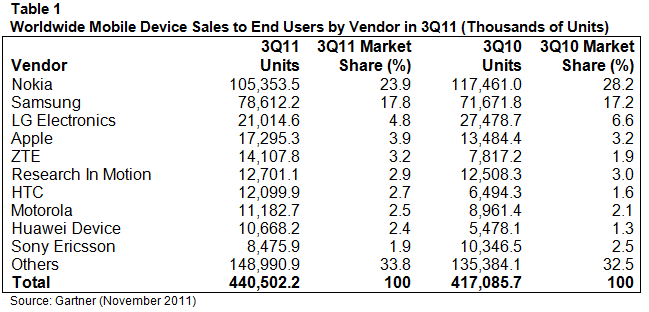
Despite a drop in market share, Nokia continued to be the worldwide leader in mobile device sales, accounting for about 24% of all global sales. The second quarter of 2011 was a low point for Nokia, although the third quarter brought signs of improvement. This is according to research from Gartner.

Dual-SIM phones in particular, and feature phones generally, maintained Nokia’s momentum in emerging markets. Gartner reckons that “heavy marketing from both Nokia and Microsoft” to push the new Lumia devices should bring more improvement in the fourth quarter of 2011. A true turnaround won’t take place, however, until the second half of 2012.

Samsung now the biggest smartphone manufacturer

The second biggest phone manufacturer by sales is Samsung. The company has also now become the number one smartphone manufacturer worldwide as its sales tripled to reach 24-million. Samsung took poll-position as a smartphone manufacturer for the first time, ahead of Nokia in Western Europe and Asia.

Gartner attributes this to the strong performance of Samsung’s Galaxy smartphones, which now cover a broad range of prices, and a weaker competitive market. Analysts expect more competition in the fourth quarter of 2011, not least because sales of the iPhone 4S, 4 and 3GS will capture share from Android manufacturers.

Apple down, but big comeback expected

Apple shipped 17 million iPhones, an annual increase of 21%, but down nearly three-million units from the second quarter of 2011 because of Apple’s new device announcement in October. Gartner believes Apple will bounce back in the fourth quarter because of its strongest ever pre-orders for the iPhone 4S in the first weekend after its announcement.

Markets such as Brazil, Mexico, Russia and China are becoming more important to Apple, representing 16% of overall sales and showing that the iPhone has a place in emerging markets, especially now that the 3GS and 4 have received price cuts.

Android now on more than half of all smartphones

The Android OS accounted for 52.5% of smartphone sales to end users in the third quarter of 2011, more than doubling its market share from the third quarter of 2010.

“Android benefited from more mass-market offerings, a weaker competitive environment and the lack of exciting new products on alternative operating systems such as Windows Phone 7 and RIM,” commented Roberta Cozza, principal research analyst at Gartner.

“Apple’s iOS market share suffered from delayed purchases as consumers waited for the new iPhone. Continued pressure is impacting RIM’s performance, and its smartphone share reached its lowest point so far in the US market, where it dropped to 10%.”

Strong smartphone growth in China, Russia

Smartphone sales to end users reached 115-million units in the third quarter of 2011, up 42% from the third quarter of 2010. Sequentially, smartphone sales slowed to seven percent growth from the second quarter of 2011 to the third quarter of 2011. Smartphone sales accounted for 26% of all mobile phone sales, growing only marginally from 25% in the previous quarter.

“Strong smartphone growth in China and Russia helped increase overall volumes in the quarter, but demand for smartphones stalled in advanced markets such as Western Europe and the US as many users waited for new flagship devices featuring new versions of the key operating systems,” said Cozza. “Slowdowns also occurred in Latin America and the Middle East and Africa.”

440m phones sold worldwide

Worldwide, sales of mobile devices totalled 440.5-million units in the third quarter of 2011, up 5.6% from the same period last year, according to Gartner. Non-smartphone devices performed well, driven by demand in emerging markets for low-cost devices from white-box manufacturers, and for dual-subscriber identity module (SIM) devices.

“Our forecast for the end of the year remains broadly in line at a worldwide level as regions such as Asia/Pacific and the Middle East and Africa make up for weaker performance in the Western European market,” said Annette Zimmermann, a principal analyst at Gartner based in Munich.

Thursday, November 3, 2011

Samsung Galaxy Note in SA: pricing and details


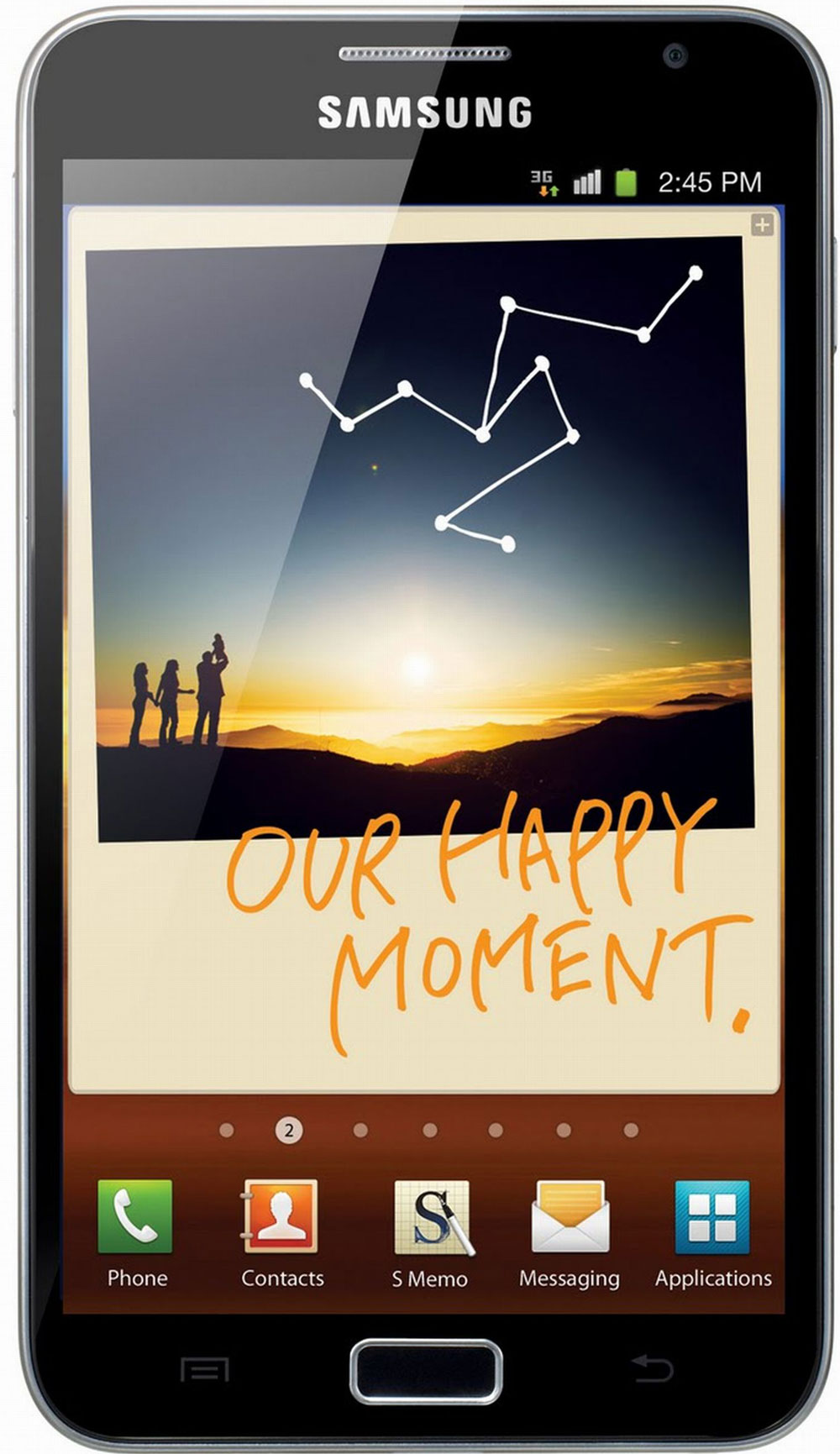
Is it a tablet? Is it a phone? Actually, it’s a bit of both. Samsung Electronics has launched what it’s calling the first and largest 5,3-inch high-definition “Super Amoled” smartphone in SA. This is a beast of a phone. And it has a beastly price tag: expect to have to fork over at least eight and a half grand to own one (outside of a contract).

Samsung puts the recommended retail price at between R8 499 and R8 999 and is punting the phone, which has a 1280×800-pixel display and a stylus for note-taking and other tasks, as combining best of tablets and smartphones in a single device.

Despite its enormous screen, the Galaxy Note is a just 9,7mm thick and weighs only 178g, which is not much more than the popular Galaxy S II.

The display is reinforced with Gorilla Glass — a standard feature in high-end smartphones these days — and the Note comes preinstalled with Google’s Android 2.3 (Gingerbread) operating system. Samsung says an upgrade to Android 4.0, also known as Ice Cream Sandwich, will follow.
The Korean company hasn’t crimped on the hardware innards, either. It includes a dual-core 1,4GHz ARM Cortex-A9 processor and 1GB of RAM. It’s available in 16GB and 32GB models in international markets, though only the 16GB is available in SA at launch.There’s a microSD slot that supports up to a further 32GB of storage space.

The Galaxy Note includes an 8-megapixel camera, LED flash, autofocus, and shoots 1080p video at 30 frames a second. It also offers a 2-megapixel front-facing camera for video calling.
Connectivity is provided via Wi-Fi (up to 802.11n) and 21Mbit/s cellular downloads (5,7Mbit/s on the uplink). There’s DNLA support, too, for streaming content to and from compatible devices like PCs.

The stylus, which Samsung calls the “S Pen”, and which slots into the bottom of the device, allows users to annotate Web pages, documents and images and take screenshots, which can be shared via e-mail, MMS and social networks.

For business users, Samsung has included support for Microsoft Exchange ActiveSync, Cisco WebEx for video conferencing, and a wide range of virtual private networking support.

The Galaxy Note is being called a “phone tablet” by Samsung. It supports multi-touch input and includes new gestures like a “judo swipe” that involves swiping the side of your hand across the screen to take a screenshot.

Users can also take selective screenshots from websites by circling the elements on the page they want to save. These can then be further annotated and shared.

In conjunction with the Galaxy Note, Samsung has launched an instant-messaging service called ChatON, its equivalent of cross-platform message service Whatsapp and Apple’s iMessage. ChatON doesn’t come preinstalled on the Galaxy Note but can be downloaded from the Samsung app store.

The Galaxy Note will be available in SA in the second week in November. — Craig Wilson, TechCentral

Friday, October 28, 2011

How employees are driving an iPad revolution, and what IT’s doing about it

September 15, 2011
 
iPad and wireless keyboard on an office desk, with an office phone
Mirroring the adoption of smartphones and PDAs before it, the explosive growth of the iPad in business can be attributed almost entirely to employees’ obsession with Apple’s “magical” tablet.

The iPad’s transformation from consumer gadget to enterprise tool points the way to an employee-driven tech future in which users — not IT departments — get to choose their own gear and applications.

IT managers are learning how to adapt, fast.

“When the iPad was first released, we didn’t have any kind of enterprise strategy about supporting the device,” said Jeff Niblack, an IT manager at UnitedHealth Group, a diversified health and well-being company with over 80,000 employees worldwide.

“Within two weeks, we started getting our first inquiries. In the following two months, though, things really exploded, and I started getting requests for pulling iPads into nearly all aspects of the enterprise. There are now around 1,100 iPads deployed.”

Kaplan Higher Education agrees. The certificate and degree program company found itself bombarded with requests from employees who wanted to use their personal iPads on the job.

“Kaplan has a very young executive team and they were just in love with the iPad,” a Kaplan representative said. “They just started buying them, and so we had to learn to integrate the iPad as quickly as possible.”

Even the IT departments at smaller organizations are having problems with crowd control when it comes to denying iPads to their users.

Jeff Gargas is the IT Director for Robinson Engineering, a civil engineering firm with 120 employees spread across eight offices through the Chicago area. Robinson currently has a dozen iPads deployed, with more to follow.

At first, Gargas was nervous about giving iPads to his users.

“I’m a big fan of Apple products, so I was bringing my own iPad into work and using it for apps like Evernote, Dropbox and RemoteDesktop,” says Gargas. “Even so, one of the main reasons I was reluctant to deploy the iPad was because there’s no easy way to centrally manage the tablet, including mass-installing apps or connecting to files on our network.”

Eventually, Robinson Engineering realized it couldn’t keep employees from using their own iPads, and had to figure out how to make it work.

“As the iPad gained more traction and press, it became a lot more difficult to fend off people going, ‘Hey, why can’t we use iPads here?’” Gargas says. “Users started just purchasing their own and bringing them in, just like I did.”

“That was both a blessing and a nightmare: a blessing because we didn’t have to train users in how to user their iPads, a nightmare because we had no way to control them.”

The difficulty in centrally managing users’ devices is the biggest barrier to entry facing IT managers who want to deploy iPads to their users. For example, while Kaplan Higher Education eventually rolled out over 500 iPads to its users, it wasn’t easy, due to the company’s inability to distribute a device with a standard “image” of all the standard apps.

“That’s not the way Apple wants it done,” the Kaplan representative said. “They see the iPad as a personal device, each iPad as distinct as its owner.”

Problems that IT managers face in deploying iPads also include the mass purchasing of apps and the inability to add the iPad to corporate data plans.

Even so, Kaplan considers the rewards of deploying iPads to be greater than the drawbacks, and it is now considering giving iPads to as many as 10,000 students.

“Once the iPad’s actually out in a user’s hands, we love it. It’s easy to support. We don’t have to pay a company like Research in Motion licensing fees for a product like Blackberry Enterprise Server, since the iPad connects with Microsoft Exchange,” says Kaplan’s IT department.

Ultimately, IT managers seem to agree: Even though there are hurdles to deploying the iPad across an enterprise, the rewards are too great to ignore. But it does take a leap of faith.

What’s the lesson for businesses?

“Part of what we discovered here at Robinson Engineering was that letting our users figure out how to use their own iPads was the best part,” says Jeff Gargas. “If we hadn’t learned to trust our users and trust the iPad, I don’t think it would have been successful.”

As for Apple fans who want to use their iPads at work, the message is clear: The best way to get your company’s IT department to start supporting iPads is to bring yours to work and just start using it. Eventually, your company will have to catch up.

Photo credit: Nibaq/Flickr.com

Sunday, October 23, 2011

How the enterprise is adopting tablets (infographic)

October 21, 2011 | Sean Ludwig
ipad

It’s no secret enterprises have begun to adopt tablets with the same fervor of consumers. Since the debut of Apple’s iPad in Jan. 2010, the integration of tablet devices into our lives and work has progressed rapidly — so fast that it’s sometimes hard to put in perspective how quickly got here.

The exclusively obtained infographic below breaks down how far workforce adoption of tablet technology has come — and where it’s headed. (The graphic was sponsored by Lenovo and Qualcomm.)

In overall world market share for tablets, the iPad clobbers all others. The iPad accounted for nearly 80 percent of worldwide tablet sales during the past 12 months, but Android is slowly gaining ground, thanks to a wide variety of devices and prices. On the higher end, there are devices like the Samsung Galaxy Tab 10.1 and 8.9, and on the lower end there’s the upcoming Amazon Kindle Fire and already well-established Nook Color.

Enterprise adoption is quite different from total adoption. A just-released survey from Good suggests the iPad and iPad 2 were responsible for 96 percent of tablet activations in the enterprise in the third quarter of 2011. With just 4 percent of activations being Android-based, Apple has a clear lead with the enterprise crowd.

Business users have different needs with their tablets, chief among them are strong and versatile applications that keep the mobile workforce connected. The iPad has a clear lead in this area with more than 136,000 iPad-optimized apps while Google won’t reveal how many apps are actually optimized for Honeycomb-based tablets. (Some estimates guess it is under 1,000 at present.) One of the most promising enterprise applications we’ve seen recently is Polycom’s video-conferencing app that works for both iPad and Android tablets.

It’s unclear at this point if Android will be able to take away much of the share the iPad has secured with enterprise users, especially in Bring-Your-Own-Device workplaces. But we’ll be watching to see what happens in this exciting space and let you know the latest.

Tablet_Adoption_infographic